Devotional
Prayer – Day 3
The way forward to prayer for me came by going back to my own spiritual-theological roots. During my first pastorate in Virginia, and then again in New York City, I had the experience of preaching through St. Paul’s letter to the Romans. In the middle of chapter 8, Paul writes:
The Spirit you received does not make you slaves, so that you live in fear again; rather, the Spirit you received brought about your adoption to sonship. And by him we cry, “Abba, Father.” The Spirit himself testifies with our spirit that we are God’s children. (vv. 15–16)
The Spirit of God assures us of God’s love. First, the Spirit enables us to approach and cry to the great God as our loving father. Then he comes alongside our spirit and adds a more direct testimony. I first came to grips with these verses by reading the sermons of D. Martyn Lloyd-Jones, a British preacher and author of the mid-twentieth century. He made the case that Paul was writing about a profound experience of God’s reality. Eventually I found that most modern biblical commentators generally agreed that these verses describe, as one New Testament scholar put it, “a religious experience that is ineffable” because the assurance of secure love in God is “mystical in the best sense of the word.” Thomas Schreiner adds that we must not “underemphasize the emotional ground” of experience. “Some veer away from this idea because of its subjectivity, but the abuse of the subjective in some circles cannot exclude the ‘mystical’ and emotional dimensions of Christian experience.”
Excerpted from PRAYER: Experiencing Awe and Intimacy with God, by Timothy Keller, published by Penguin Books, an imprint of the Penguin Publishing Group, a division of Penguin Random House LLC. Copyright © 2014 by Timothy Keller.
← Previous (Day 2) | Next (Day 4) →
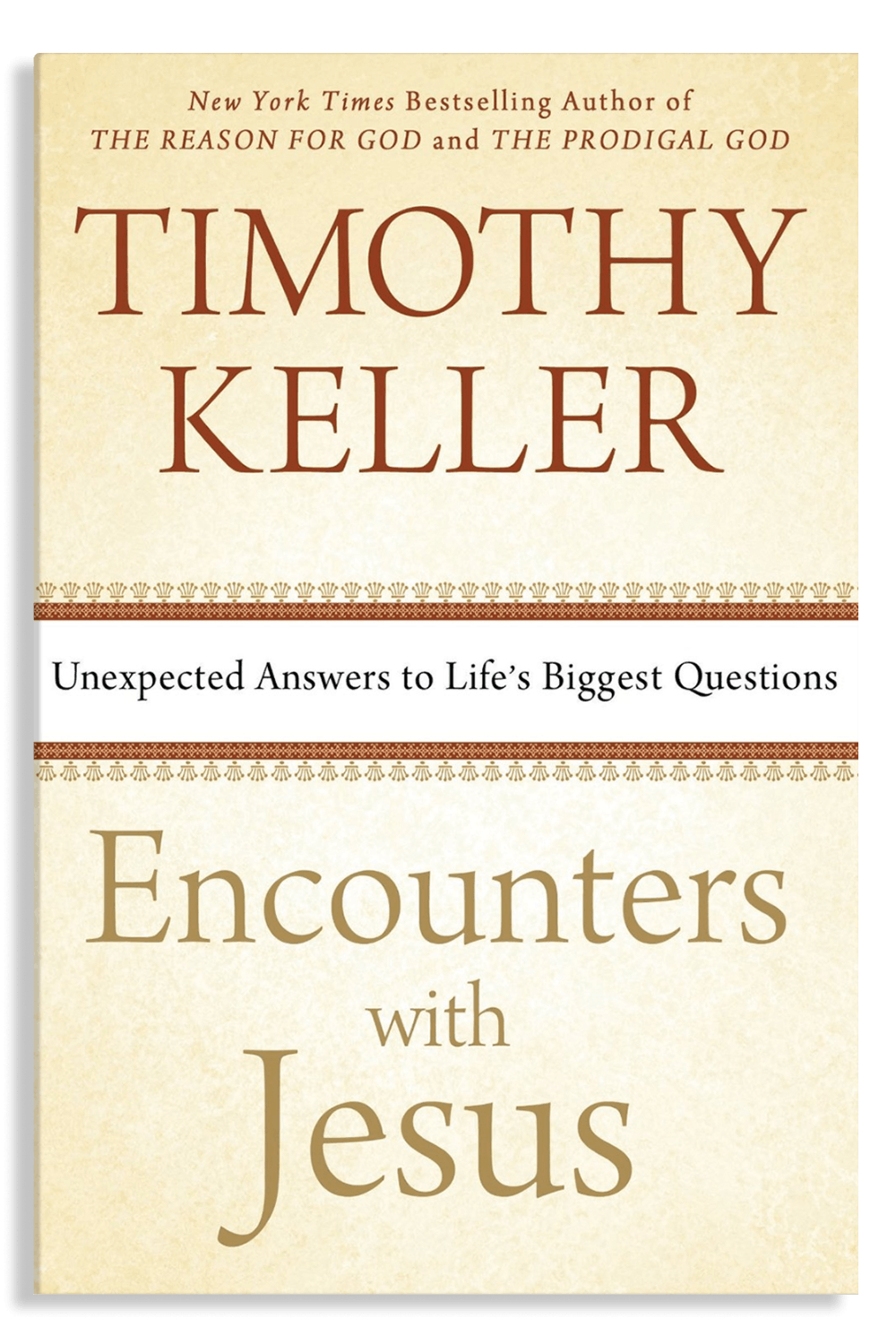
This Month's Featured Book
Meeting Jesus Changes Everything!
In this book, Tim Keller explores how the interactions Jesus had with people were transformative for them, and how these encounters are still able to address the big questions and doubts about life that each of us have today.