Sermon
Walking in the Spirit
By Tim Keller

Tim Keller | January 15, 2006
On the surface of it, the Christian teaching about the Trinity is very difficult. It overloads the mental circuits. The doctrine of the Trinity is that God is one God, eternally existent in three persons. That’s not tritheism, where there’s really three gods who stick together a lot and like each other. And it’s not unipersonalism, which is really one God who sometimes takes this form, and sometimes takes this form—different forms in different places.
Trinitarianism is that there’s one God in three persons who know one another and love one another. So God is not more fundamentally one than he is three, and he’s not more fundamentally three than he is one. It is cognitively difficult, but the doctrine of the Trinity is bristling and exploding with life-shaping, wonderful, glorious implications.
In Mark 1:9-13, Jesus makes his appearance. In these five little verses, we have the whole history of the world recapitulated. We learn in these five verses: there’s a dance, the greatest need of your life is to get into that dance, and Jesus is the one who can bring you in.


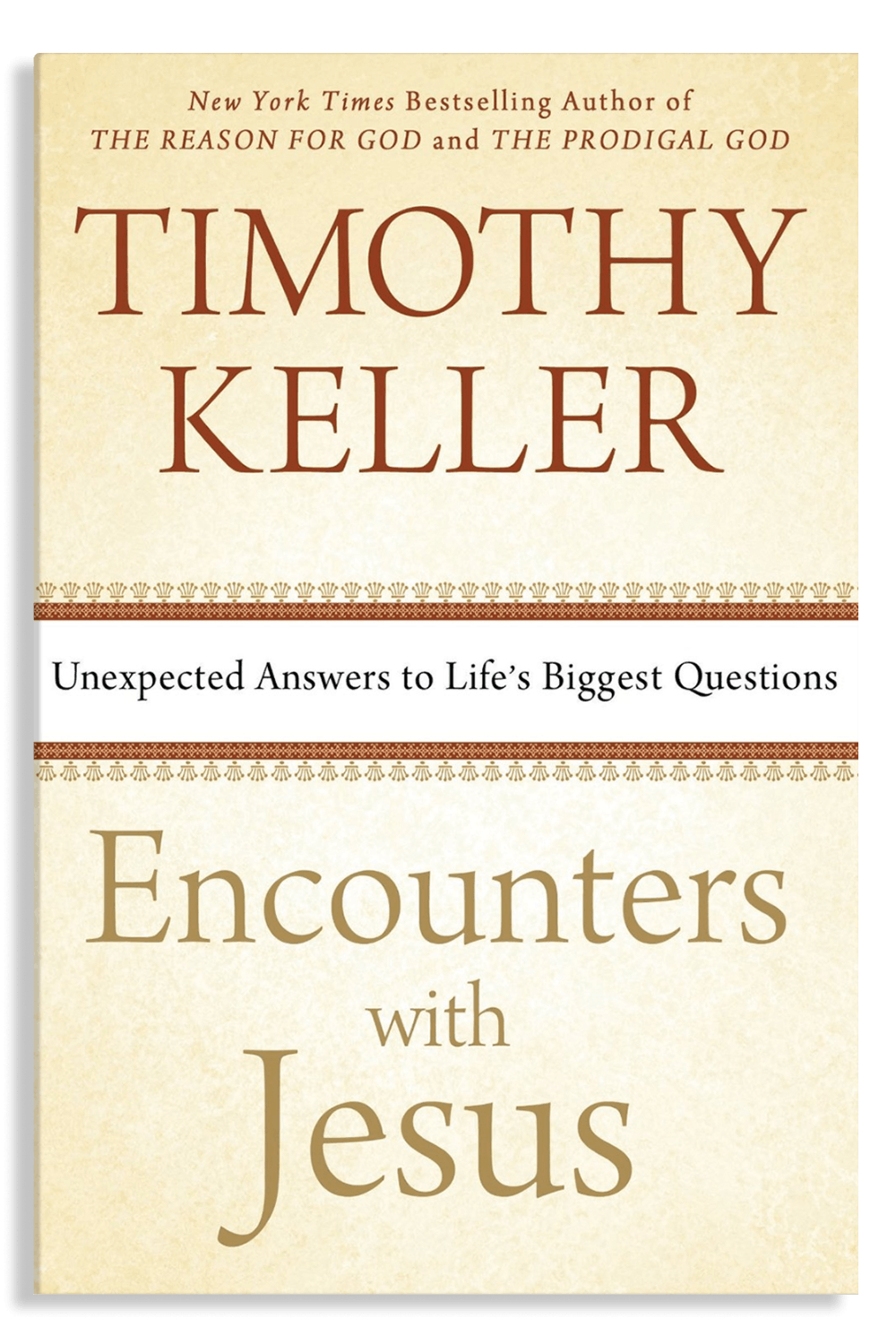
This Month's Featured Book
In this book, Tim Keller explores how the interactions Jesus had with people were transformative for them, and how these encounters are still able to address the big questions and doubts about life that each of us have today.